When it comes to mastering a new language, the market is awash with apps and platforms, each promising fluency. But for the serious learner, the question isn't just "Does it work?" but rather, "Who is Babbel Best For? (Target Audience)" — and more specifically, is it the right fit for you? From its German roots in 2008, Babbel has carved out a niche as one of the best-selling language apps, and its success isn't accidental. It thrives by catering to a specific kind of learner: the young, dedicated individual who values structure, real-world applicability, and measurable results over casual, gamified distraction.
If you’re someone who appreciates a well-designed curriculum, insights from language experts, and a pathway that actually leads to practical communication skills, then you're already ticking some of Babbel's target boxes. Let’s unpack exactly who stands to gain the most from this robust language ecosystem.
At a Glance: Who is Babbel Best For?
- Dedicated Learners: You're ready to commit time and effort beyond casual swiping.
- Result-Oriented Individuals: You want to see tangible improvement in speaking and understanding.
- Practical Communicators: Your goal is to hold real-world conversations, not just memorize vocabulary lists.
- Young Professionals & Students (18-34): The core demographic that finds Babbel's approach highly relevant for career, travel, or personal growth.
- Structured Self-Starters: You thrive with a clear curriculum but also appreciate the flexibility of app-based learning.
- Live Interaction Seekers: You want to complement app learning with human-led virtual classes.
- Corporate Learners: Companies looking to equip their employees with practical language skills for global business.
- Mid-Range Budgeters: You're willing to pay for quality and effectiveness, understanding that "free" often comes with hidden costs or limitations.
More Than Just an App: The Babbel Philosophy
Before we dive deep into the ideal user, it’s worth understanding Babbel's foundation. Launched in 2008, this German-born platform quickly grew into a global player. It’s not just a collection of flashcards; it’s an entire learning ecosystem built by over 200 language experts. These aren't just academics; they're people crafting lessons designed for real life. Their method, backed by research from institutions like Yale University and the University of South Carolina, focuses on conversational competence. This means Babbel isn't interested in you learning obscure grammar rules you'll never use. Instead, it prioritizes phrases and vocabulary for everyday interactions, travel, and professional settings.
This focus on practical application is key to its success. With 15 languages on offer and over 60,000 lessons—all voiced by native speakers—Babbel creates an immersive experience that's both challenging and rewarding. They've consciously adopted a full paid subscription model, deliberately avoiding third-party ads. This isn't just about revenue; it's a strategic move to foster dedication and minimize distractions, ensuring users focus purely on learning.
The Dedicated Learner: Ready to Commit
Babbel truly shines for those who are genuinely ready to put in the work. This isn't a platform designed for dabblers or those seeking a purely gamified, five-minute-a-day distraction. While it does incorporate engaging elements, the core experience demands a commitment to structured learning.
Think about it: Babbel has sold over 15 million subscriptions since its inception, hitting 10 million by October 2020 and continuing to grow. This isn't the kind of statistic you see from a casual "try before you buy" app. It points to a user base willing to invest financially and, more importantly, time. If you see language learning as a serious endeavor rather than a fleeting hobby, Babbel's ad-free, subscription-based model will resonate with your approach. You're not looking for shortcuts; you're looking for an effective path.
The Pragmatic Goal-Setter: Real-World Readiness
Do you want to actually speak the language you're learning? Not just read it, not just recognize a few words, but engage in conversations, order food, navigate a city, or chat with a colleague? If so, Babbel is likely in your corner. Its methodology is explicitly geared towards practical language use in real-world situations.
The statistics back this up: 75% of users report improving their oral proficiency after learning for just 15 hours, with 69% seeing results after a mere 6 hours. This isn't about rote memorization; it's about context, repetition in relevant scenarios, and practicing conversation. Each lesson is bite-sized, typically 10-15 minutes, making it easy to integrate into a busy schedule, but those small chunks add up to significant progress because they’re focused on immediate utility. You're learning "survival phrases" and common dialogue patterns that you can deploy right away.
The Young Adult & Beyond: A Demographic Sweet Spot
While language learning is a lifelong pursuit, Babbel's user demographics paint a clear picture of its primary appeal. The largest age group using Babbel is 25-34 (24.88%), closely followed by 18-24 (20.04%). This means nearly half of Babbel’s users are in the vital stage of their lives where career development, international travel, and expanding personal horizons are key drivers.
- For the Student: Whether it's to enhance university studies, prepare for a study abroad program, or simply gain a valuable skill, Babbel offers structured learning that complements formal education.
- For the Young Professional: In today's globalized job market, bilingualism is a huge asset. Babbel provides the practical communication skills needed for international business, client interaction, or even relocating for work.
- For the Traveler: If you dream of authentically experiencing cultures beyond what guidebooks offer, having a foundational grasp of the local language transforms your trip. Babbel prepares you for common travel scenarios, making your adventures richer and smoother.
This younger demographic also tends to be comfortable with app-based learning and appreciates the flexibility it offers compared to traditional classroom settings. They're tech-savvy, goal-oriented, and often seeking efficient ways to acquire new skills.
The Structured Self-Starter (Who Needs a Nudge)
Many aspiring language learners are self-motivated but struggle with direction. They might download free apps, complete a few lessons, and then feel lost in a sea of disjointed exercises. Babbel solves this. It provides a clear, progressive curriculum without the rigidity of a fixed class schedule.
Imagine having a roadmap laid out by experts, guiding you from basic greetings to complex sentence structures, all within an intuitive app. That's the Babbel experience. You get the autonomy of learning at your own pace, combined with the assurance that each lesson builds logically on the last. It's ideal for those who say, "I want to learn Spanish, but I don't know where to start." Babbel gives you that starting point and keeps you moving forward.
This structured approach is particularly effective because it’s backed by cognitive science principles, focusing on spaced repetition and contextual learning to help you retain information more effectively. You won't just learn words; you'll learn how to use them.
The Community Seeker & Live Learner: Enter Babbel Live
For those who crave human interaction and the dynamic environment of a classroom, Babbel didn't stop at just the app. They introduced Babbel Live in early 2021, and it's been a game-changer for many. This feature offers over 40 hours of live, virtual classes led by certified teachers.
Babbel Live is for the learner who:
- Needs direct feedback: A teacher can correct pronunciation and grammar in real-time.
- Thrives on interaction: Discussing topics with peers and a teacher can solidify learning.
- Desires accountability: Scheduled classes provide a commitment device.
- Wants to accelerate progress: Live conversation practice is invaluable for fluency.
Interestingly, 25% of Babbel Live users start their language journey directly with the live classes, while 75% transition to them after starting with the app. This shows its appeal both as an entry point and as an advanced option. Babbel Live experienced a 300% increase in subscriptions within its first year and now contributes a significant 9% to the company’s revenue, underscoring its value to a substantial segment of learners. It’s perfect if you find motivation in a live setting but still want the convenience of online learning.
The Corporate Climber: Language for Professional Growth
Babbel’s reach extends beyond individual learners. Since 2021, it has ventured into the B2B space, collaborating with over 1,000 companies and onboarding 5,000 new corporate learners. This highlights another key target audience: businesses and their employees seeking practical language skills for professional development.
Corporate language learning now constitutes roughly a third of the overall market, and Babbel is actively expanding this segment in Europe and the U.S. This isn't about casual learning; it's about equipping a workforce with the communication tools needed for international clients, global teams, and cross-cultural collaborations. If your company is looking for a scalable, effective solution to upskill its employees in language, Babbel offers a proven methodology that delivers tangible results, contributing to its impressive revenue growth which surged to $270 million in 2022.
Who Babbel Might NOT Be For
To be fair and trustworthy, it’s important to clarify where Babbel might not be the ideal fit:
- The Casual Doodler: If you're looking for a completely free app that focuses heavily on gamification and you're not particularly committed to consistent learning, Babbel's paid, structured approach might feel too serious.
- The Deep Grammarian: While Babbel teaches grammar in context, it doesn't offer exhaustive, academic-style grammar explanations. If your primary goal is to dissect every nuance of subjunctive mood or verb conjugation tables, you might need a supplementary resource.
- The Absolute Beginner with Zero Commitment: If you're not ready to dedicate at least 15-20 minutes a few times a week, you won't get the full benefit. Its effectiveness hinges on regular engagement.
- The True "Freebie" Seeker: Babbel operates on a full subscription model. While it offers excellent value, it's not a free service. If a paid model is a complete deal-breaker, you'll need to explore other options.
- The Polyglot Juggler: While Babbel offers 15 languages, its interface is designed for focusing on one language at a time. If you're simultaneously learning five languages and need an app that facilitates rapid switching or comparison across many, it might not be optimized for that specific workflow.
Making the Investment: Understanding Babbel's Value
Babbel's model is entirely subscription-based, ranging around $13 per month or $7 per month for an annual plan. This places it in the mid-range among its competitors, a price point that reflects its quality and depth of content. This isn't a "premium" price, but it's certainly an investment.
But why pay when there are free alternatives? The answer lies in the value proposition:
- No Ads: A seamless, distraction-free learning environment.
- Expert-Crafted Content: Lessons designed by over 200 linguistic experts, not crowd-sourced or AI-generated.
- Research-Backed Methodology: Proven to be effective in improving oral proficiency.
- Comprehensive Ecosystem: From app lessons to live classes and vocabulary-building browser extensions like Toucan (which Babbel acquired), you get a full suite of tools.
- Dedication & Results: The paid model itself fosters a sense of commitment, which is crucial for language learning success.
Ultimately, you're paying for a product that is designed to get you speaking a new language effectively. To really understand if the investment aligns with your personal learning goals, you might want to Discover Babbels true value. It’s about weighing the cost against the potential for real, measurable progress.
Beyond the App: Expanding Your Babbel Experience
Babbel isn't just a standalone app. It's building a comprehensive learning experience:
- Toucan Browser Extension: Acquired by Babbel, this handy extension helps you build vocabulary while browsing the web by subtly integrating new words into the text you read. It's a clever way to keep learning passively throughout your day.
- Podcasts and Games: Babbel offers supplementary content like podcasts and language-focused games that reinforce learning in engaging, entertaining ways, breaking up the routine of structured lessons.
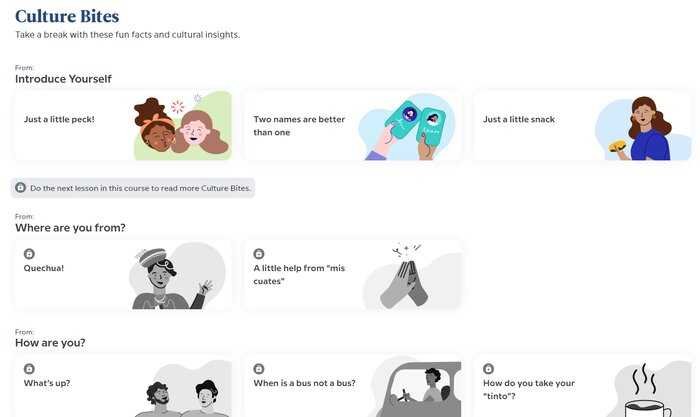
- Cultural Content: Understanding a language goes hand-in-hand with understanding its culture. Babbel incorporates cultural insights into its lessons and through dedicated content, giving you a richer, more nuanced learning experience.
These additional resources reinforce Babbel's commitment to creating well-rounded language learners who are not just memorizing words but truly understanding the context and culture behind them.
Putting It All Together: Is Babbel Your Language Partner?
Babbel has built its reputation by focusing on a specific, powerful goal: getting you to speak a new language with confidence in practical, real-world situations. It’s for the dedicated individual, often a young adult or professional, who values structure, expert-designed content, and measurable results.
If you’re ready to move beyond casual language exploration and commit to a robust program that has proven effectiveness, Babbel offers a compelling solution. Whether your motivation is travel, career advancement, personal enrichment, or simply a desire to connect with more of the world, Babbel provides a clear, expert-guided path to achieving conversational fluency. It asks for your dedication and investment, and in return, it promises to equip you with a valuable, life-changing skill. The question now isn't just "Who is Babbel best for?", but rather, "Are you ready to be a Babbel learner?"